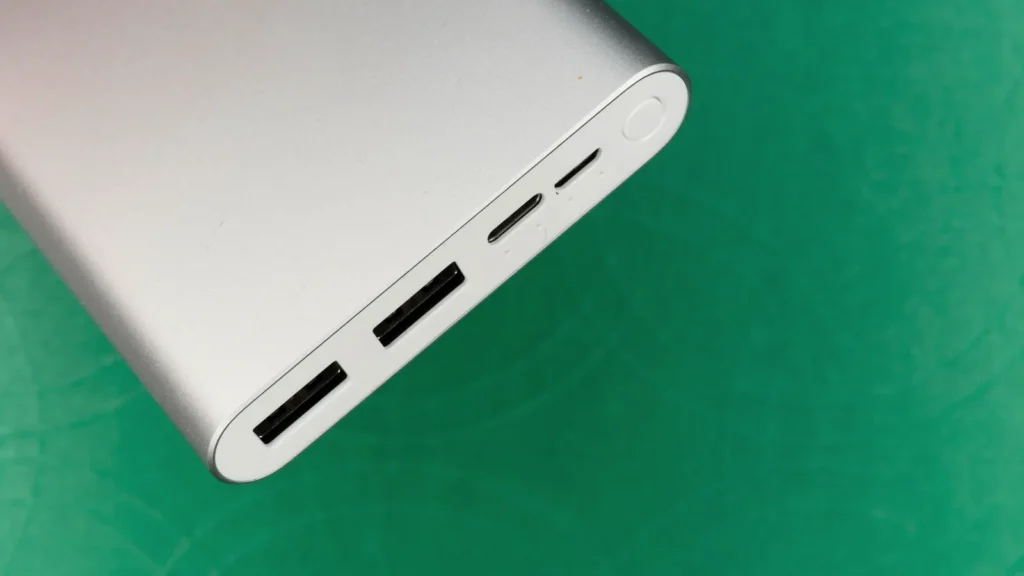
On a work trip from Delhi to Kerala this month, one of us was stopped at the security check over a power bank. Not because it was forgotten in the bag. It was out, in the tray, exactly where it should be. The officer simply wanted to know its watt-hour rating.
It was the first time anyone had asked. And honestly, most of us have never looked for that number. We know our power bank as “the 20,000 one” or “the small one”, not by watt-hours. But that is the number airport staff and airlines now care about, and after the incidents of the past few weeks, you should expect the question more often.
This guide contains affiliate links. If you buy through them, Elsepost may earn a small commission at no extra cost to you. As an Amazon Associate, Elsepost earns from qualifying purchases. How we handle affiliate links.
Why security is asking now
Power banks run on lithium-ion cells. When one is damaged, overcharged or badly made, it can overheat and catch fire, and on a plane that is a serious problem.
India has had a run of close calls. In October last year, a passenger’s power bank caught fire on an IndiGo flight to Dimapur while it was taxiing at Delhi airport. The crew put it out and no one was hurt. Then, earlier this month, an IndiGo flight from Delhi to Chennai was diverted to Hyderabad after a fire linked to a power bank in an overhead bin. Within days, the Directorate General of Civil Aviation (DGCA) banned that specific model, the MOBIKINS MK-PB-04, from all flights to, from and within India.
That ban covers one model, not all power banks. But it sits on top of rules the DGCA already put in place last winter, and it explains why the people at the scanner are paying closer attention.
The rules, in plain words
- Cabin bag only. Power banks are never allowed in checked baggage. If one is found in a checked bag, expect to be called back to have it removed.
- Not in the overhead bin. Keep it with you, in the seat pocket or in a bag under the seat, so the crew can deal with it quickly if something goes wrong.
- No use during the flight. You cannot charge your phone from a power bank on board, and you cannot charge the power bank from the seat’s USB port either.
- Up to 100 Wh is fine. Between 100 and 160 Wh, you need the airline’s approval and can carry at most two. Above 160 Wh, it cannot travel with you at all. These limits follow international aviation guidance that Indian airlines apply.
- Speak up. If a device gets unusually hot, smokes or smells odd, tell the cabin crew immediately.
How to find your watt-hours in 30 seconds
Turn your power bank over and read the small print on the back. Many now print the Wh figure directly. If yours only shows mAh, you can work it out:
Watt-hours = mAh × 3.7 ÷ 1,000
The 3.7 is the standard voltage of the cells inside most power banks. So a 10,000mAh bank is about 37 Wh, a 20,000mAh bank is about 74 Wh, and a 25,000mAh bank is about 92.5 Wh. In practice, almost anything up to about 27,000mAh stays under the 100 Wh line.
Two things make the security conversation easier. First, keep the label readable. A label that has worn off, or a no-name bank with no markings at all, is the one most likely to be held back, because the officer has nothing to check. Second, know the number before you reach the tray, so the answer takes a second instead of a search.
Five power banks that pass
All five are well under 100 Wh, carry clear capacity markings, and come from brands with a service presence in India. Each was in stock when we checked on 26 October 2026. Prices change often, so check the listing for the current price.
| Power bank | Watt-hours | Best for | |
|---|---|---|---|
| Ambrane 10,000mAh | about 37 Wh | Light day bag | Check price |
| Lifelong MagSafe 10,000mAh | about 37 Wh | iPhone users | Check price |
| Xiaomi 4i 20,000mAh | about 74 Wh | All-rounder | Check price |
| Xiaomi 5i 67W | about 74 Wh | Laptop travellers | Check price |
| Stuffcool Giga Max 25,000mAh | about 92.5 Wh | Long trips, laptops | Check price |
For a light day bag: Ambrane 10,000mAh with built-in cable (about 37 Wh)
Slim, light, and the Type-C cable is attached, so there is one less thing to forget. At 22.5W it fast charges most phones. This is the one to keep in a laptop sleeve for short trips and long days at the office.
Best for a day bag
Ambrane 10,000mAh Slim Power Bank with Built-in Cable
- 10,000mAh
- 22.5W fast charging
- Built-in Type-C cable
Good
- Cable attached, one less thing to forget
- Slim enough for a laptop sleeve
Watch out
- Roughly two phone charges
- Not meant for laptops
For iPhone users: Lifelong MagSafe 10,000mAh (about 37 Wh)
It snaps magnetically onto the back of an iPhone and charges without a cable, with a wired port as a backup. One honest note: you cannot use it during the flight, so it earns its place in the lounge, at the gate and in the taxi after landing.
Best for iPhone users
Lifelong MagSafe Wireless and Wired 10,000mAh Power Bank
- 10,000mAh
- Magnetic wireless
- Wired port too
Good
- Snaps on, no cable needed
- Handy at the gate and in the cab
Watch out
- Cannot be used during the flight
- Wireless is slower than a cable
The safe all-rounder: Xiaomi Power Bank 4i 20,000mAh (about 74 Wh)
One of the most widely bought power banks in India. Enough capacity for three to four phone charges on a multi-city trip, comfortably inside the limit, and widely recognised by the people who check them.
The safe all-rounder
Xiaomi Power Bank 4i 20,000mAh 33W
- 20,000mAh
- 33W fast charging
- Well under 100 Wh
Good
- Three to four phone charges
- A widely sold, familiar model
Watch out
- Heavier than a 10,000mAh bank
- Not built for laptops
If you travel with a laptop: Xiaomi Power Bank 5i 67W (about 74 Wh)
Same safe capacity, but with 67W output, enough to top up many thin laptops through Type-C, and a built-in cable. This is the one we would choose for work trips where the laptop matters as much as the phone.
Best for laptop travellers
Xiaomi Power Bank 5i 20,000mAh 67W
- 20,000mAh
- 67W output
- Built-in cable
- Digital display
Good
- Tops up many thin laptops
- Display shows the charge left
Watch out
- Heavier than a 10,000mAh bank
- Check your laptop charges over Type-C
The biggest you can carry without asking: Stuffcool Giga Max 25,000mAh (about 92.5 Wh)
For long trips and heavy laptop users. It packs 25,000mAh and 100W output into a compact body. It is closer to the 100 Wh line than the others, which is exactly when a clear label matters, so check the rating printed on the unit and keep it readable.
Most power, no approval needed
Stuffcool Giga Max 25,000mAh 100W Power Bank
- 25,000mAh
- 100W output
- Built-in Type-C cable
Good
- Most capacity you can carry freely
- Enough output for larger laptops
Watch out
- Close to the 100 Wh line, keep the label readable
- The heaviest pick here
Before your next flight
- Check the Wh number on the back, or work it out from the mAh.
- Keep it in your cabin bag, never in checked luggage.
- Take it out at the scanner if asked, and keep the label readable.
- On board, keep it under the seat or in the seat pocket, not the overhead bin, and leave it switched off.
- If you own the MOBIKINS MK-PB-04, leave it at home.
- Retire any power bank that is swollen, dented or gets hot while charging, whether you are flying or not.
The rules feel fussy until you picture the alternative. A power bank fire in an overhead bin, at 35,000 feet, is the kind of problem no one wants a crew to solve. Knowing one number takes the fuss out of it.
Sources
- Business Standard: DGCA bans power bank model after fire on Delhi to Chennai IndiGo flight
- Gulf News: India bans specific power bank model on flights
- WION: DGCA prohibits in-flight use of power banks
- Brut: DGCA issues new power bank safety rules
- IATA: Passengers travelling with lithium batteries (PDF)