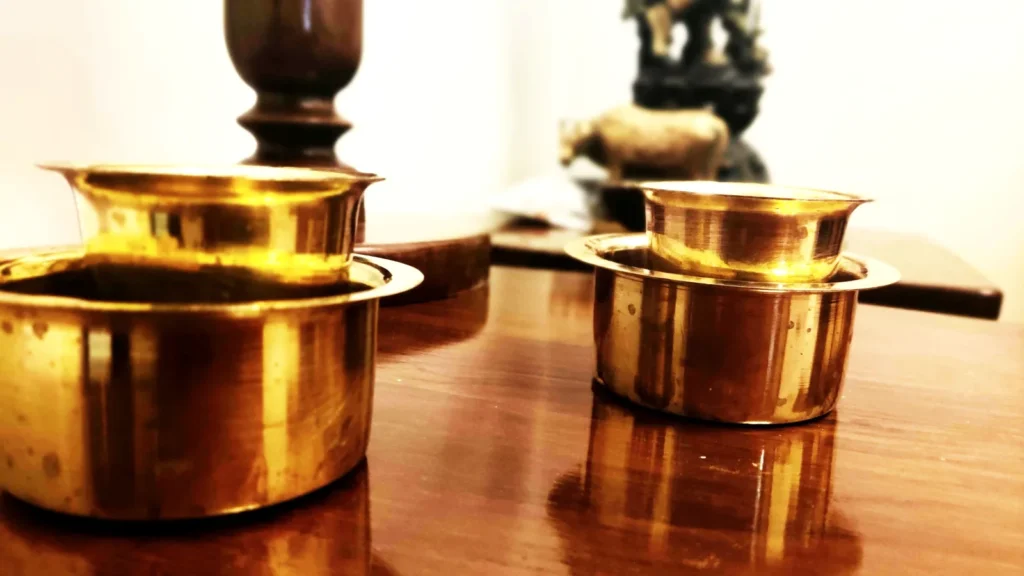
Every year before Diwali, the diyas, kalash, bells and idols come out of the cupboard looking dull or patchy. If you want to clean brass puja items without scratching them or stripping a finish, the trick is simple. First, work out what the object actually is. Then, start with the gentlest method and stop as soon as it looks right.
This guide draws on advice from museum conservators and heritage maintenance manuals, so it works for everyday pieces and family heirlooms alike. Most of it also applies to copper.
Why brass and copper go dull in the first place
Brass is an alloy of copper and zinc. Both brass and copper react slowly with air, moisture and the salts and oils from our hands. So a lamp that is handled daily during the festive season will darken faster than one sitting in a cupboard.
That darker layer is tarnish. It is not dirt, and it is not always a problem. In fact, the US General Services Administration notes that a stable patina protects metal from further corrosion. Also, every round of polishing removes a tiny amount of the surface. Over the years, heavy polishing can blur fine details on an idol or an engraved thali.
Step 1: Check what you are cleaning
Before you reach for lemon or a store-bought polish, spend two minutes on these checks. They decide which method is safe.
The magnet test
Hold a fridge magnet against the object. If it sticks, the piece is brass plating over steel. Plated items need only mild soap and water, because the thin brass layer can rub off. However, if the magnet does not stick, the item is likely solid brass, although it could also be plating over a non-magnetic metal such as zinc.
The lacquer check
Many newer lamps and decor pieces carry a clear lacquer coat. Look for a glassy sheen, small cracks or flaking at the edges, and fingerprints that never seem to fade. Lacquered brass usually does not tarnish much. So if a lacquered piece looks dull, it often only needs a wipe with a damp cloth. Acids such as lemon or vinegar can cloud or damage the coating.
The heirloom question
Some old pieces have a deliberate dark finish or an aged patina that is part of their character. Conservators at the Canadian Conservation Institute advise cleaning without polishing whenever you are unsure. Meanwhile, valuable antiques are best shown to a professional, since stripping the patina can lower their value.
Step 2: How to clean brass puja items, gentlest first
Work through these methods in order. Stop at the first one that gives you the result you want.
- Dry dusting. Use a soft brush, such as an old toothbrush, to lift dust and ash from grooves. This is often enough for idols that live in a closed mandir.
- Soap and warm water. Soak the item briefly in warm water with a drop or two of mild dish soap. Then clean it with a soft cloth, and use the toothbrush for carvings. This removes oil, ghee and soot from diyas, and it is safe for plated and lacquered pieces.
- Lemon and salt. For solid, unlacquered brass, sprinkle salt on a cut lemon and rub it over the surface, squeezing as you go. Rinse well and dry at once.
- Vinegar, salt and flour paste. For heavier tarnish, mix about a teaspoon of salt with half a cup of vinegar. Then add enough flour to make a paste. Spread it on, leave it for around ten minutes, rinse and buff dry.
- A mild commercial brass polish. If home methods fall short, try a gentle polish. Test it on a hidden spot first, and follow the maker’s directions.
Whatever you use, the rinse matters as much as the scrub. Acid or salt left in crevices keeps working on the metal. So rinse thoroughly with clean water, then dry completely with a soft, lint-free cloth.
What to avoid when you clean brass puja items
A few common habits do more harm than good. Here is a short checklist.
- No steel wool or scouring pads. They leave fine scratches that collect tarnish faster.
- No car or stainless steel polish. These can contain hard particles that scratch copper alloys.
- Never mix ammonia with bleach. The combination releases a poisonous gas. Also, ammonia itself can attack copper under some conditions.
- No acids on lacquered or plated items. Use soap and water only.
- No dishwasher. Wash brass by hand instead.
- Do not buff plated pieces hard. The plating can wear through.
Keeping the shine for longer
Once your brass looks right, a little care stretches the gap between cleanings. For example, handle polished pieces with clean, dry hands, or wear cotton gloves when you move them. Wipe off ghee and soot after each use rather than letting it build up over weeks.
Conservators also use a thin coat of microcrystalline wax on clean metal to slow tarnish. Then they buff it with a soft cloth. Still, for most homes, regular gentle wiping does the job. After the festival, store items dry and wrapped in soft cloth, away from damp walls and the kitchen.
In short
To clean brass puja items well, check for plating and lacquer first. Then start with soap and water, and move to lemon, salt or vinegar only on solid, uncoated brass. Rinse and dry every time. Finally, let a valuable old piece keep its patina. A calm, slow approach keeps your puja items looking good for many Diwalis to come.
Related on Elsepost
- Silver Hallmark Explained: What to Check Before Dhanteras
- Diwali Lights: Brighter, Safer and Cheaper to Run