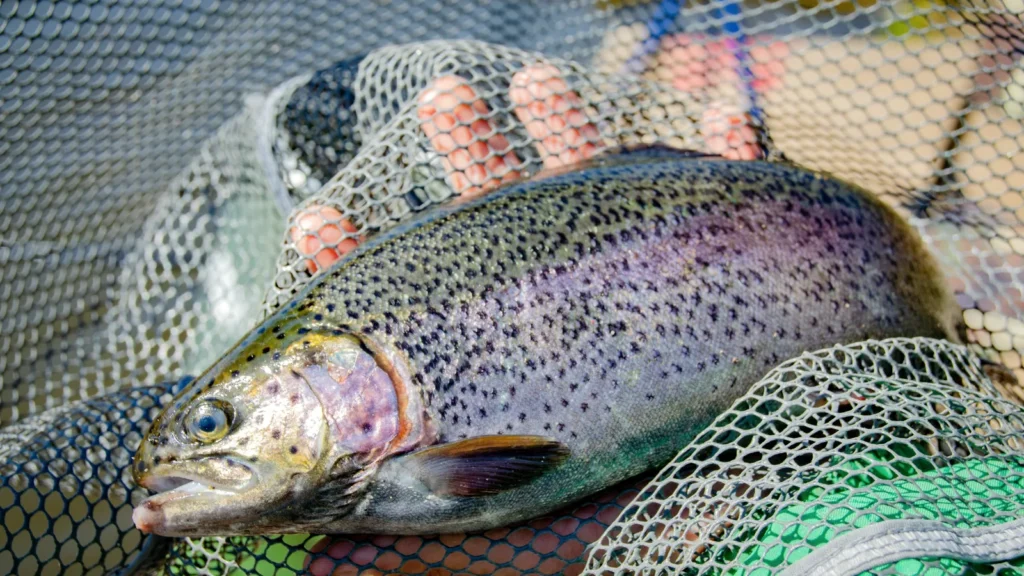
Kashmir trout farming is moving from simple concrete tanks to sensors, recycled water and phone alerts. The fish itself is not new to the valley. However, the way it is raised is changing fast, and that shift could decide how much Himalayan trout reaches plates beyond Srinagar.
Here is what is changing, who is driving it, and what still holds the sector back.
A British import that became a Kashmiri staple
Trout arrived in Kashmir more than a century ago. According to Mongabay, a shipment of fry from Scotland reached the valley in 1900, after an earlier batch of eggs died on the way. A hatchery followed at Harwan in 1901. Since then, cold, oxygen-rich, snow-fed streams have made the region a natural home for brown and rainbow trout.
For decades, though, output stayed small. Most farms are family-run sets of concrete raceways, which are long channels that river water flows through. Kashmir Life reports a typical unit produces only one or two tonnes a year.
How fast Kashmir trout farming has grown
The numbers have climbed sharply in a decade. Jammu and Kashmir produced 298 tonnes of trout in 2015-16. By 2025-26, that figure reached 3,010 tonnes, Greater Kashmir reports, making it India’s leading trout region.
Meanwhile, private trout units grew to 1,649 by 2024-25. Hatcheries rose to nine and feed mills to six over the same period. Government support helped, too. The Centre says more than ₹2,299 crore has gone into coldwater fisheries nationally, including ₹149.73 crore for projects in the union territory under the Pradhan Mantri Matsya Sampada Yojana.
The big bet: water that gets used again
The most visible upgrade is in Ganderbal district. There, Khyber Aquaculture opened a farm on an eight acre site beside the Sindh river in July 2026. It uses a recirculating aquaculture system, or RAS, which filters and reuses water instead of letting it flow straight through.
That matters because trout are fussy. The farm keeps water between 10 and 14 degrees Celsius, with tightly controlled oxygen levels, according to SeafoodSource. So floods, warm spells or a muddy river matter less. Kashmir Life adds that sensors watch the river for silt, and the farm switches to groundwater wells when the water turns muddy.
The scale is also new. The farm starts at roughly 1,200 to 1,500 tonnes a year, depending on the report, with a target of 7,000 tonnes. Still, it depends on imported eggs from the US and Denmark, and on equipment from Europe.
Smaller tools for smaller farms
Most trout farmers cannot afford a full RAS. For them, cheaper digital tools may matter more. For example, Sher-e-Kashmir University of Agricultural Sciences and Technology of Kashmir won a patent in July 2026 for a smart pond monitoring system.
It uses connected sensors to track temperature, pH, dissolved oxygen, murky water and water level. Then it sends live readings and alerts to a phone app. In short, a farmer could spot falling oxygen before fish start dying, without walking every tank by hand. The university has not said what it will cost or when farmers can buy it.
What still holds the sector back
Technology does not fix everything. Disease, a shortage of quality seed, weak cold chains and unorganised selling remain common problems, according to a fisheries scientist writing for Fisheries India. Also, Kashmir Life notes that nearly all lending to the sector has come from a single bank.
For buyers elsewhere in India, the cold chain is the part to watch. Trout spoils quickly, so better chilling and packaging decide whether Kashmiri fish can travel far. If those links improve, Himalayan trout could become a regular sight in city stores, not just a treat for visitors to the valley.
Related on Elsepost
Sources
- Greater Kashmir: J&K’s trout sector gets fresh push
- Kashmir Life: Kashmir’s Trout Run
- SeafoodSource: Khyber Aquaculture launches RAS trout farm in Kashmir
- Only Kashmir: SKUAST-K secures patent for IoT-based smart fish pond monitoring system
- Mongabay India: Trout swims to success in Jammu and Kashmir
- Fisheries India: Rainbow trout farming in the Kashmir valley