Start with what you want the bass to do
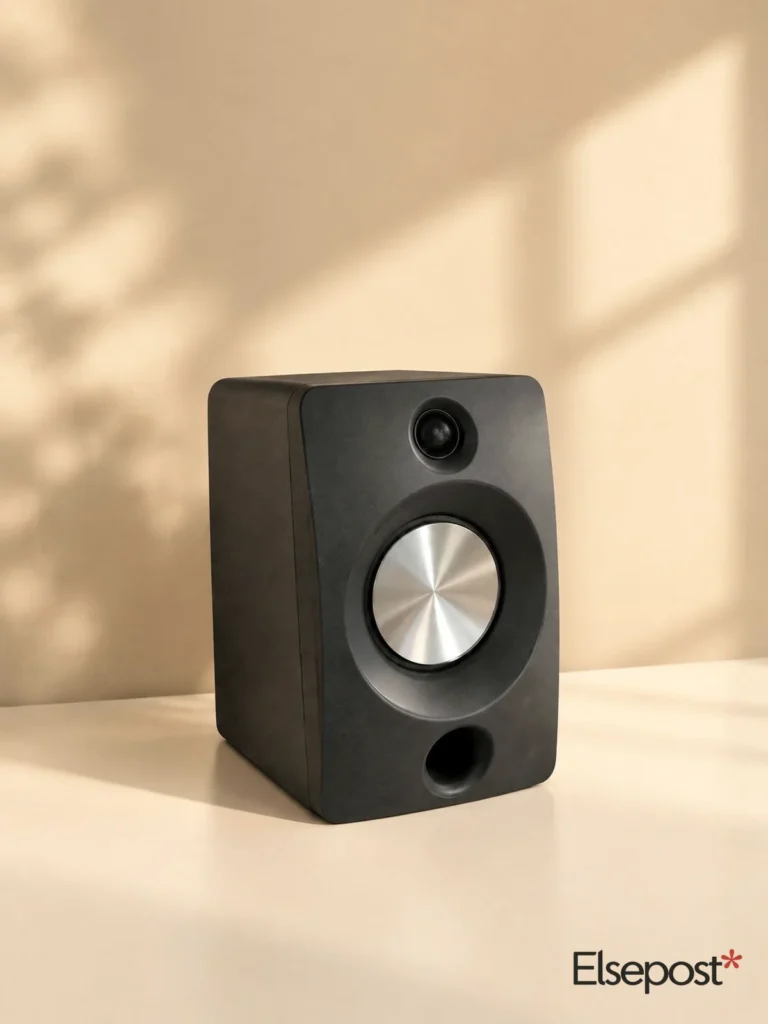
The Aura 5 makes more sense when you stop asking it to replace a subwoofer. Its bass gives music a firm rhythm and keeps action scenes lively, but the deepest effects do not have the physical weight some buyers will expect at this price. That distinction matters more than how loud the pair can play.
In our listening, bass-heavy music exposed that limit more readily than vocals or acoustic material. Groove mode added energy to beats, but it did not turn the speakers into a room-shaking system. If low-end rumble is the main thing missing from your current setup, this would not be our first recommendation.
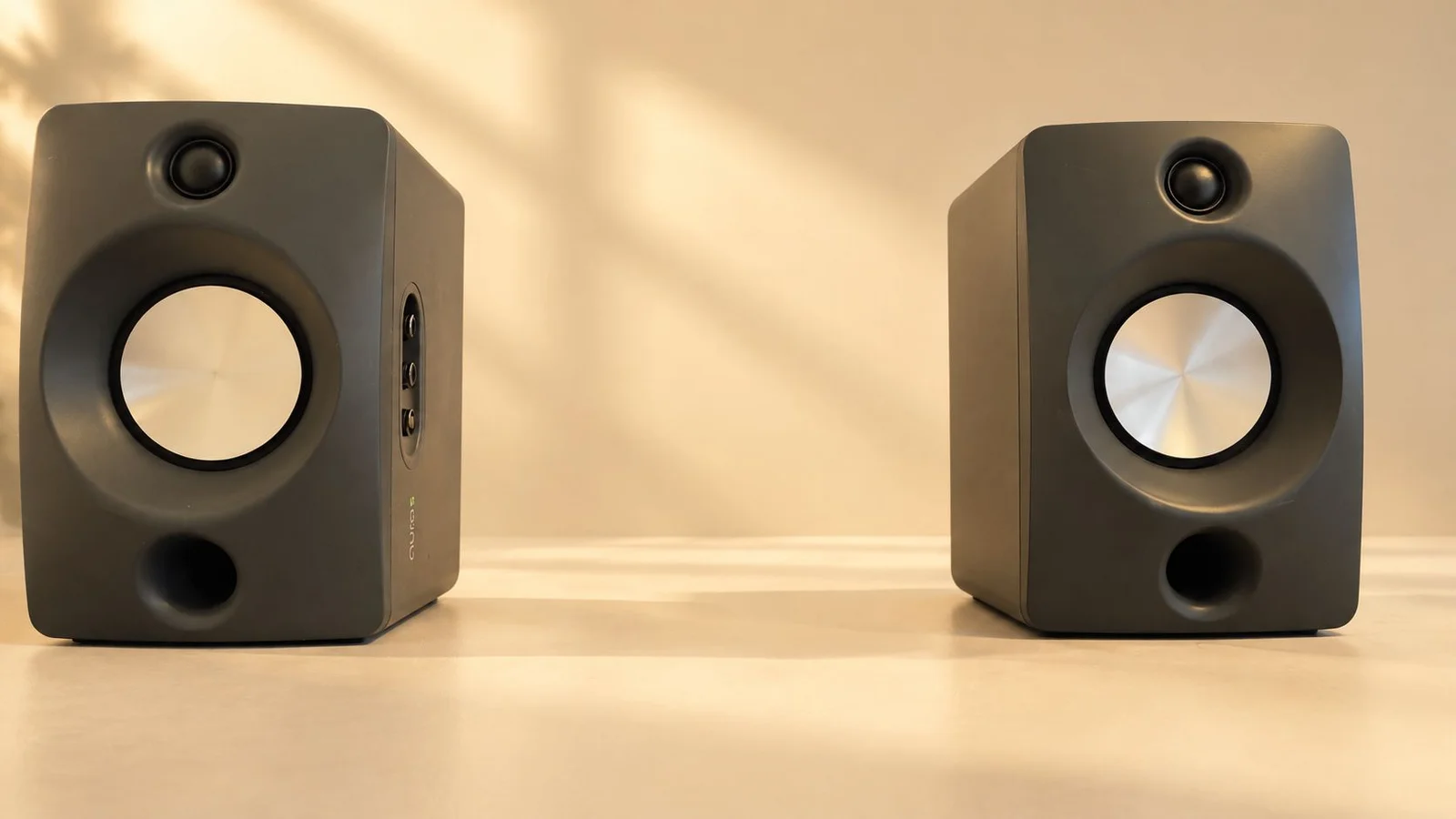
The stronger reason to choose the Aura 5 is the space between sounds. With the cabinets about a metre apart on a desk, left-to-right movement was easy to follow. Voices stayed anchored between the speakers rather than seeming to come from whichever cabinet was closer. That balance is the point of buying a pair like this.
Check the furniture before the feature list
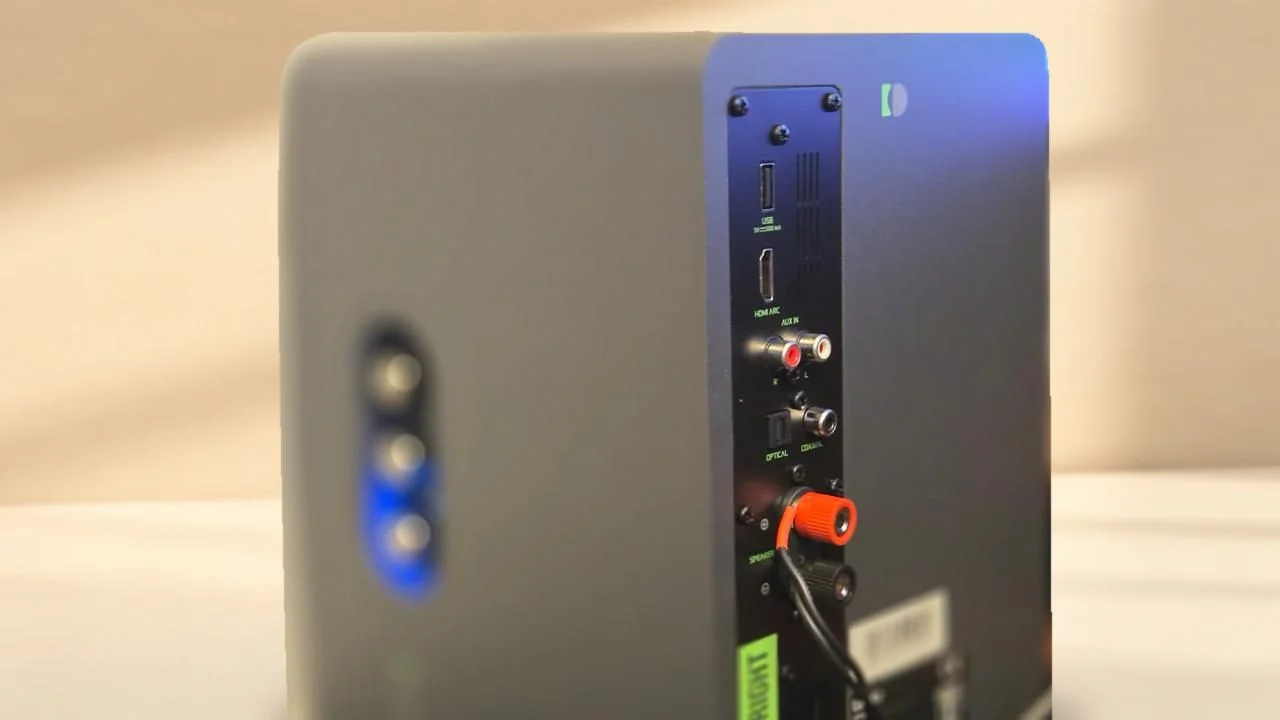
Two cabinets give you freedom to set the stereo width, but they also need two suitable places to sit. This is not a purchase to make first and squeeze onto a shelf later. The right cabinet contains the amplifier, inputs and controls; it needs power, while a speaker cable joins it to the left cabinet.
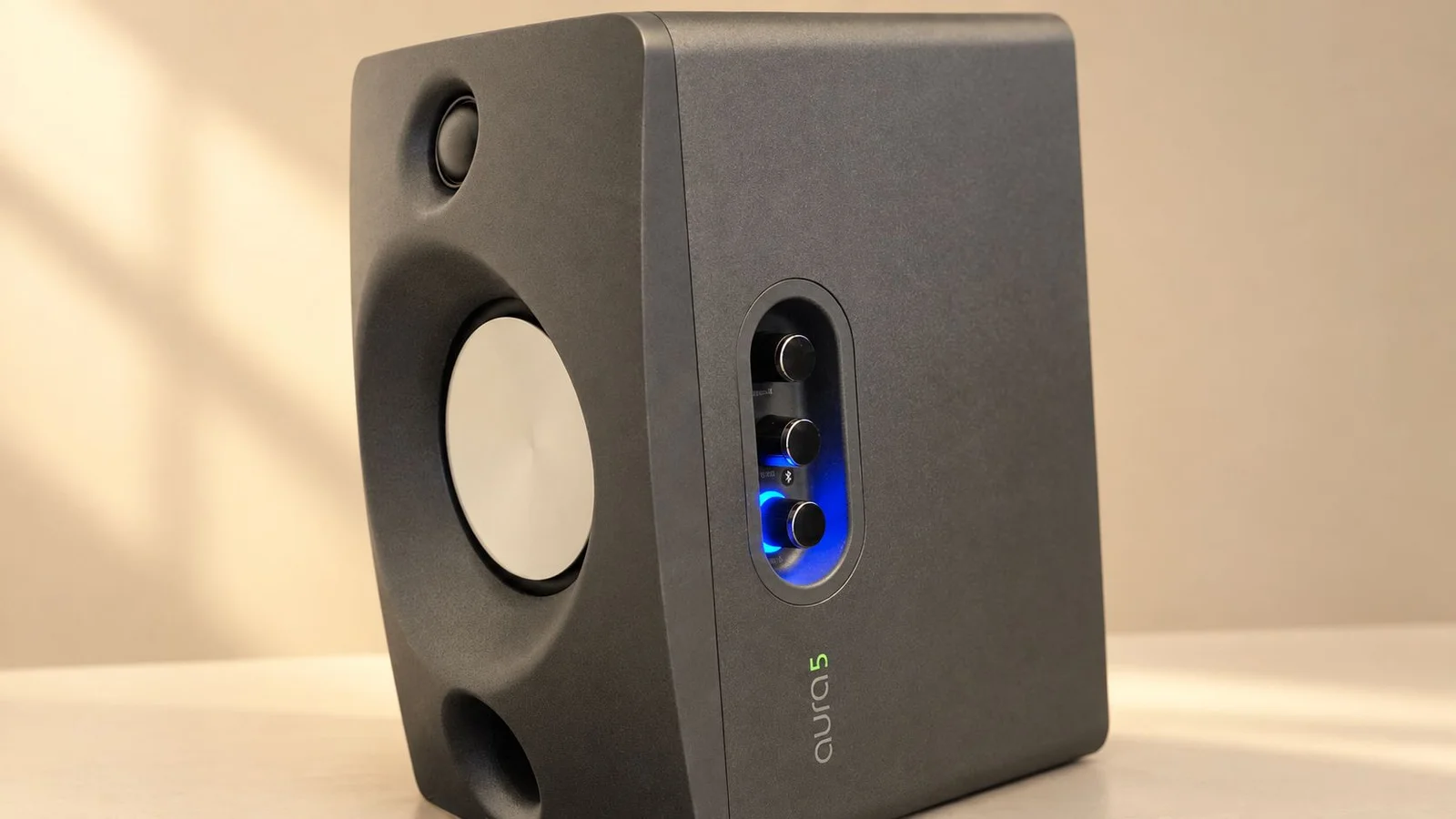
The front-facing vents are useful when planning a shelf or TV-unit setup. They do not make the boxes small, though. Lumio lists each cabinet at 174mm wide, 273mm tall and 235mm deep, and advises a surface at least 250mm deep with additional room for the active speaker’s cables. Measure the usable space, not just the overall width of the furniture.
There is another placement concern: the drivers have no protective grille. We like being able to see the aluminium woofer and silk dome tweeter, but a low shelf within reach of a child or pet is a less comfortable proposition. The exposed design is part of the buying decision, not merely a styling detail.
Lumio’s dimensions and setup advice
What it is like to live with
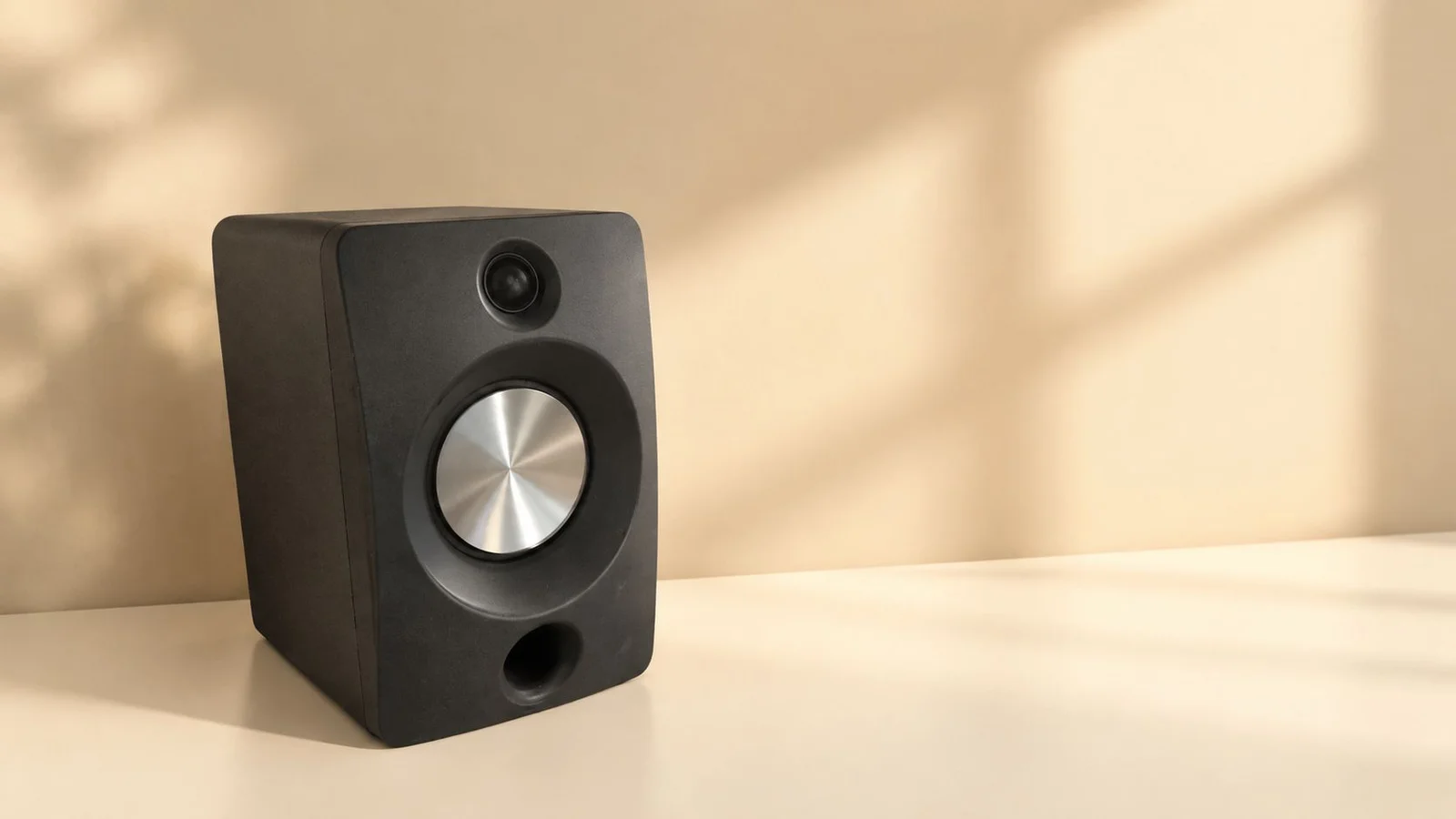
The appeal in daily use is that the controls are ordinary and accessible. Bass, treble and volume have physical knobs on the active cabinet. There is no companion app to work through before you can listen. The remote adds input and mode selection, with an OLED display that makes its settings visible in a dark room.
The remote was also the part that felt least finished. We noticed a delay between a button press and the speaker responding. It did not erase the appeal of the system, but it is an irritation worth knowing about before buying.
Our TV setup worked over HDMI ARC with CEC: the TV remote adjusted speaker volume and the speakers switched on with the television. With a PC, we tried both AUX and USB; USB sounded better to us in that setup. Bluetooth from a Samsung Galaxy Z Fold8 paired quickly and remained stable as we moved between rooms in an 1,800 sq ft home. That is our experience in one home, not a range guarantee.
Optical and coaxial inputs are also provided. They add flexibility for other equipment, but our connection checks for this review were HDMI ARC, AUX, USB and Bluetooth. A long input list should not be mistaken for a claim that we tested every socket.
Clarity matters more here than spectacle
We mostly used Studio mode for music. It kept voices easy to pick out, left room around instruments and avoided making brighter material tiring at higher volume. Podcasts benefited from that same clarity. These are useful strengths if the speakers will spend as much time playing conversation as music.
That character carried into films and games. Dialogue remained intelligible, while effects had width and stayed distinct when the soundtrack became busy. The experience was more convincing for placement and separation than for the weight of the biggest impacts. We would choose it for a clear stereo presentation, not as a shortcut to surround sound.
The headline specifications need their context. Lumio rates the pair at 100W RMS at 1% THD and advertises 105dB SPL at one metre with 1% THD. Its 35Hz figure is an in-room extension claim at 80dB; the detailed specification separately lists a 40Hz-20kHz anechoic response. Those are manufacturer figures, not measurements from this review. Our listening impressions should not be read as verification of those numbers.
Manufacturer specifications and measurement conditions
Who should spend Rs 22,999 on it?
The Aura 5 is a sensible choice for someone who has room for two cabinets, wants one pair to handle TV and desk listening, and puts vocal clarity and stereo separation ahead of deep bass. It is particularly easy to understand as a purchase when physical controls and several wired connections matter more to you than app-based features.
We would pass if the available space forces both speakers into a cramped spot, if the exposed drivers are likely to be within reach of small hands, or if the goal is the impact of a separate subwoofer. The slow remote response is a smaller compromise, but still one you will encounter in use.
At the current Rs 22,999 asking price, the recommendation is therefore conditional rather than universal: buy it for a well-placed stereo pair that handles everyday listening clearly. Do not buy it because a bass-extension number makes it sound like a home-theatre system in two boxes.