
Delhi based AION Private Limited has launched a decision intelligence platform. So it is aimed at India’s power utilities, disaster management agencies, water authorities and police departments. The pitch is simple to state and hard to build. It should first help these institutions decide faster, and then keep a record that can be checked months later.
The platform ships as seven separate products. First, PowerGenie, REDSM and RE-cast work on different parts of the power sector. Next, PowerIntel maps who owns and regulates the industry. Then FloodCast watches rivers and glacial lakes. TerraLens, meanwhile, is a 3D map for any institution’s own data. Finally, AION Rakshak forecasts police station workload. So the range runs from electricity trading to flood warnings to law enforcement planning, tied together by one idea.
Karan Dhaul, Director at AION, framed that idea around accountability rather than speed alone. “AION focuses on making every decision traceable and auditable. It shows where the data came from, how reliable a forecast was, and what information was available when a decision was made,” he said. “Simply put, AION is a technology and decision intelligence company. It helps Indian institutions make better, data backed decisions, while keeping a clear record of the assumptions behind every one.”
That framing matters because of how these decisions get challenged. For instance, a power purchase bid, a renewable energy settlement bill or a flood alert can be questioned weeks or months after the fact. AION’s answer, instead, is to keep the paper trail ready before anyone asks for it. That trail shows where each number came from, what a forecast said when it was issued, and how it measured up against what actually happened.
Three rules behind the decision intelligence platform
AION says every product follows the same three rules.
- First, sourced: every figure names the data feed it came from and how old it is. A missing value still shows as a dash, never as a zero.
- Next, scored every day: forecasts are stored exactly as issued, then compared against what was actually measured.
- Held back when beaten: when a simple baseline model outperforms a complex one, the product switches to the baseline. It then says so on screen.
PowerGenie, REDSM and RE-cast: the power trio
India’s grid runs on 96 scheduling blocks of 15 minutes each day. However, with more solar and wind feeding in, and markets clearing at short intervals, utilities now decide block by block. Buy, sell or hold power, over and over through the day. AION’s three power products are built around that rhythm.
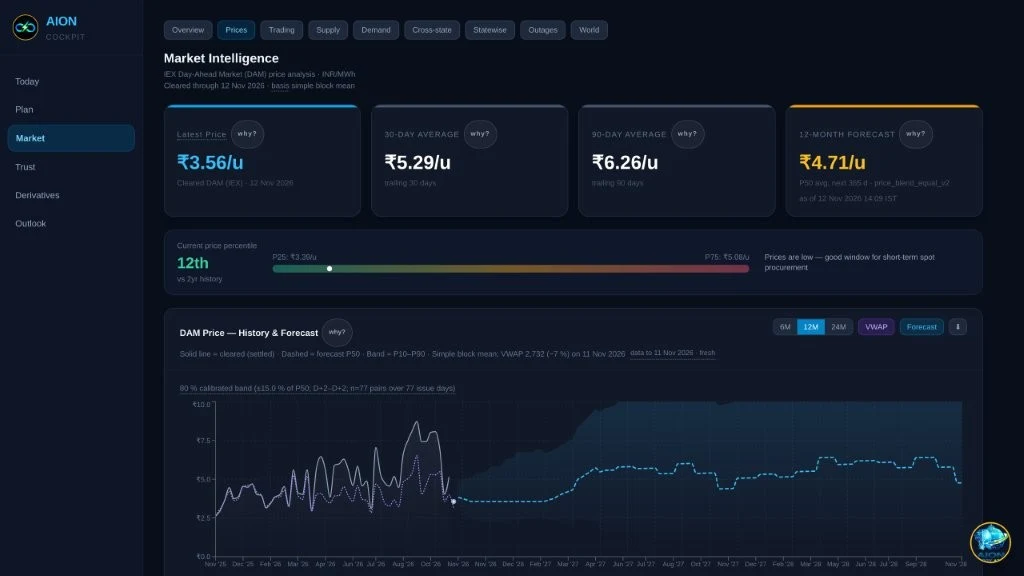
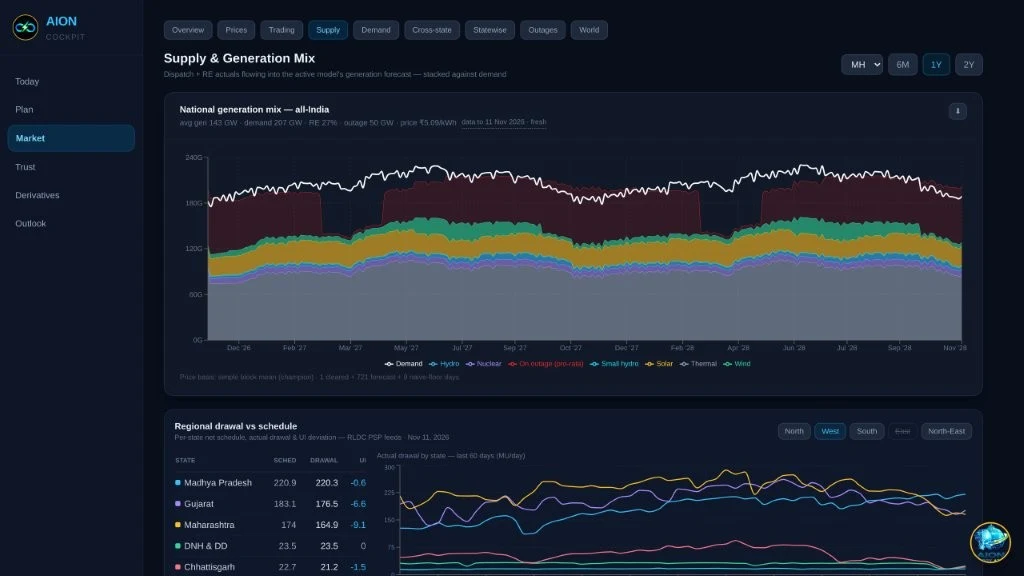
So PowerGenie issues a buy, sell or hold plan for every 15-minute block across the next seven days, with quantities, rupee cost and deviation exposure attached. The plan is then rebuilt three times a day. Once issued, it is never edited after the fact, which is what makes it useful as a record later. It covers all 32 states and Union Territories.
REDSM handles forecasting, scheduling and deviation settlement for wind and solar plants in one system. Each charge is computed under whichever regulation was in force on the date of that block. So a bill can still be explained line by line months after it was raised.
RE-cast, meanwhile, forecasts generation for individual solar and wind plants in 15-minute blocks, both day ahead and intraday. It blends weather physics with a model trained on each plant’s own past output. It then exports the schedule in the format the relevant state load dispatch centre accepts.
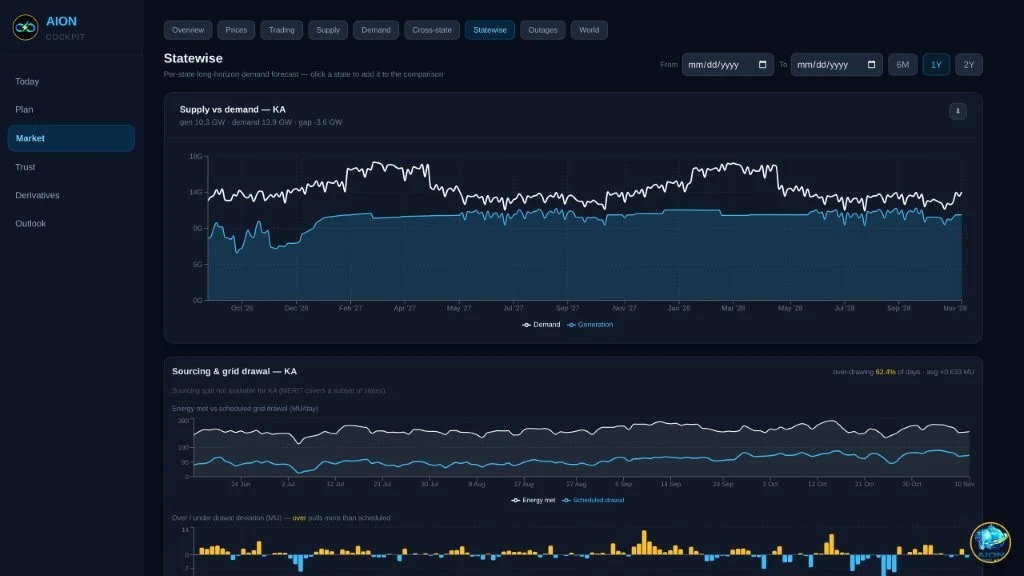
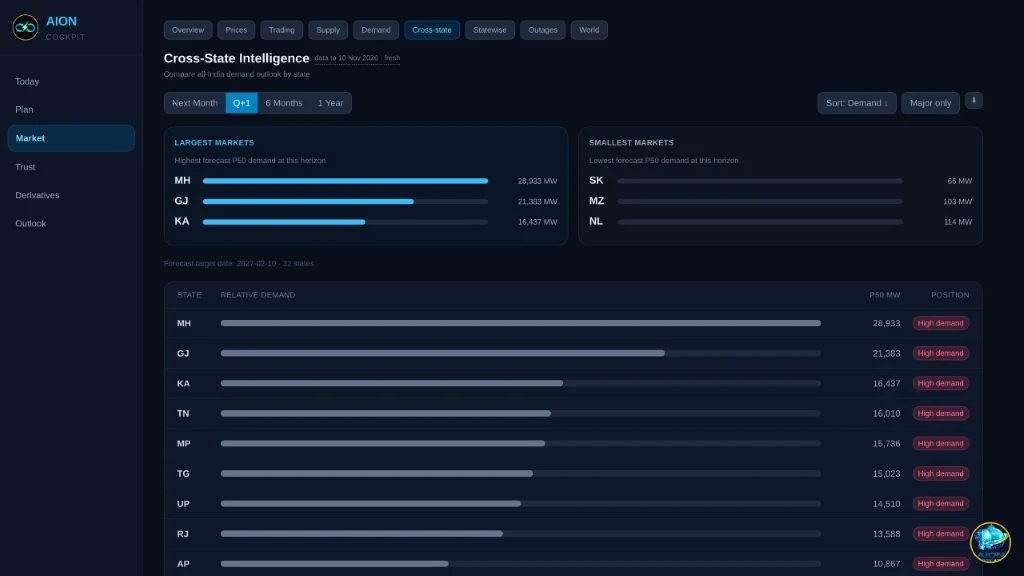
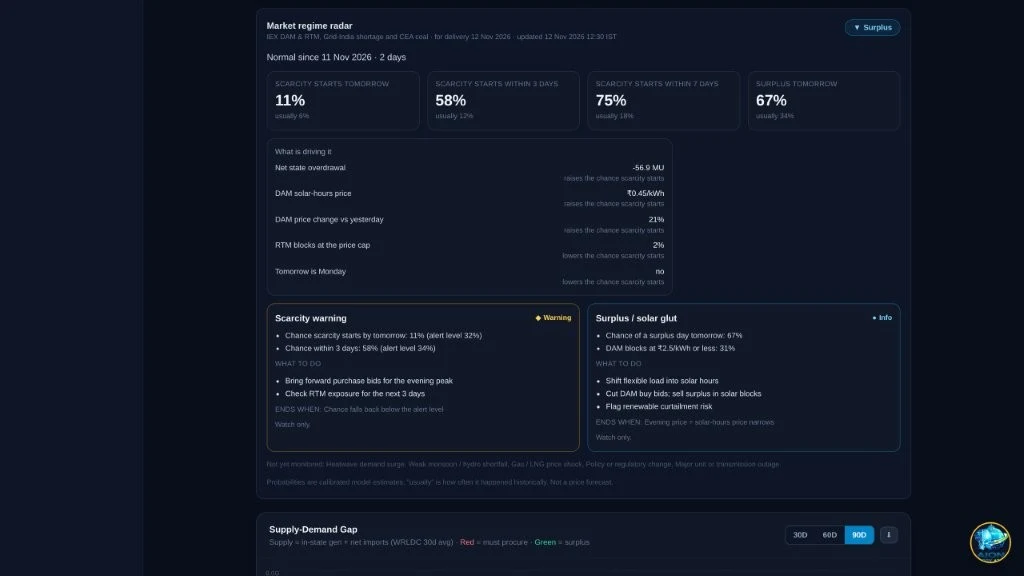
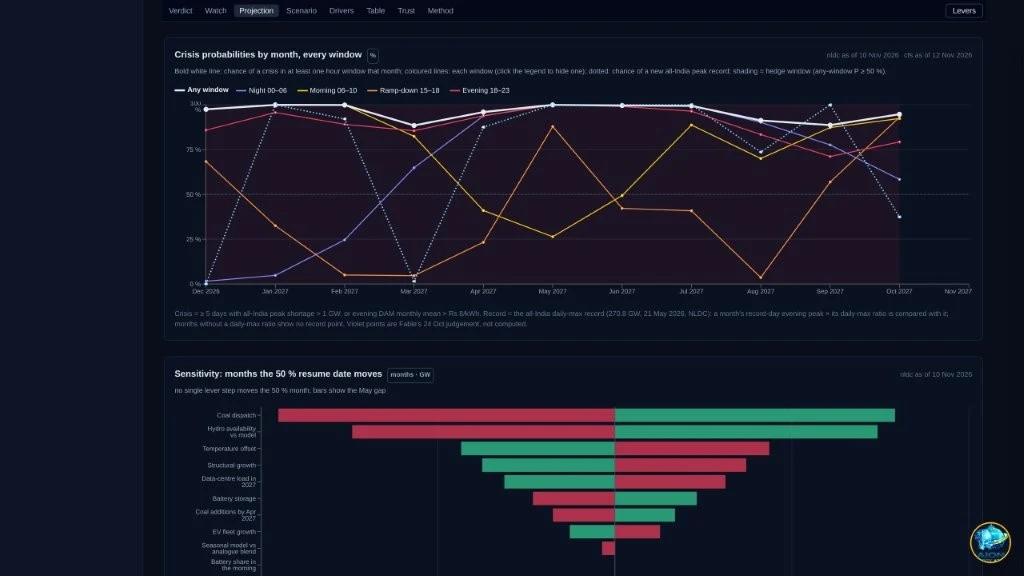
Two more views, finally, round out the PowerGenie dashboard. One is a market regime radar that estimates how likely a supply crunch is in the days ahead. The other, instead, is a longer range crisis probability chart, broken down by time of day.
PowerIntel: mapping the industry itself
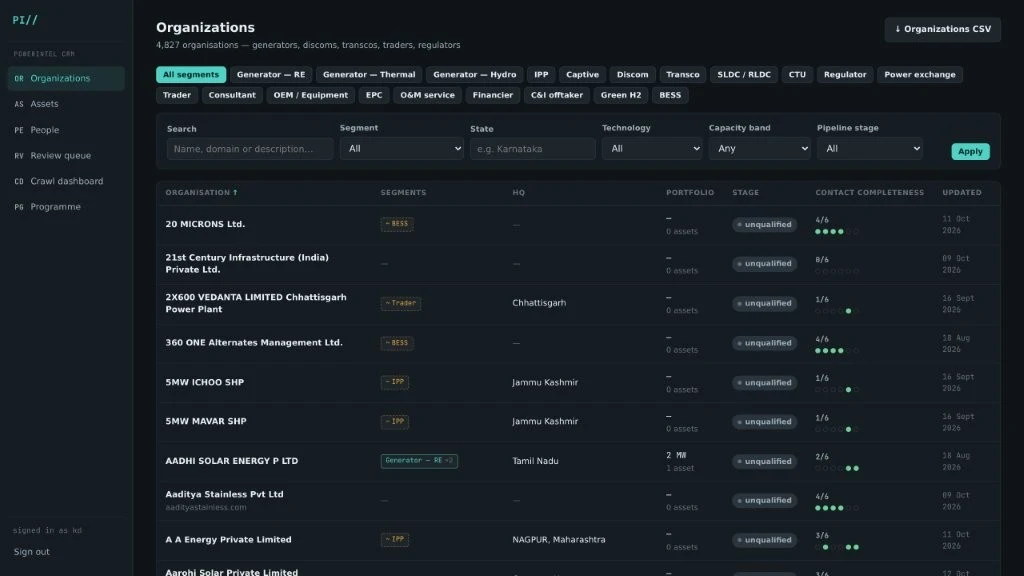
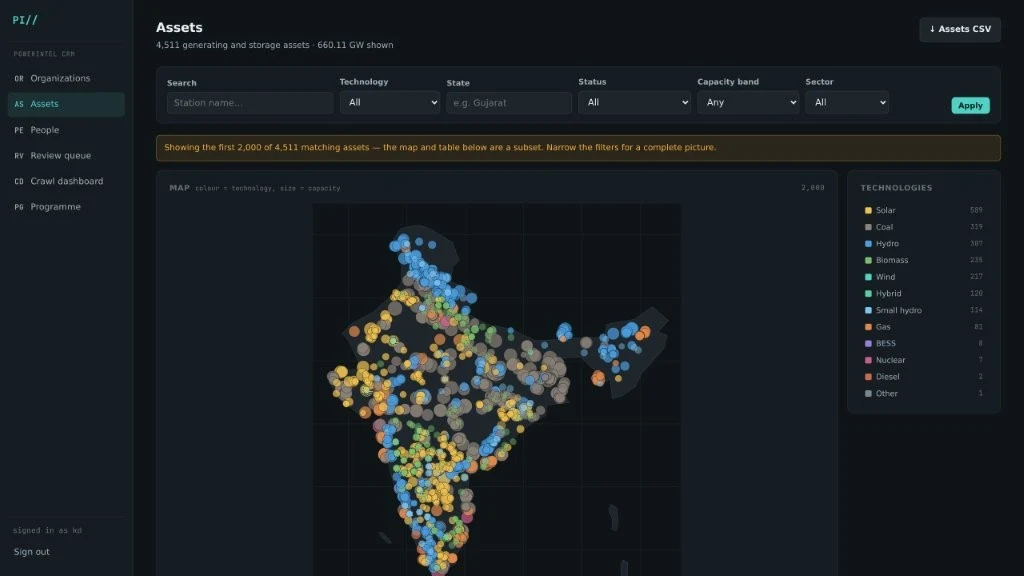
PowerIntel works differently. It is less a forecasting tool and more a directory, covering generators, discoms, transcos, traders and regulators. Still, every organisation and asset entry links back to a public source. That matters for an industry where ownership and capacity details are often scattered across filings.
FloodCast, TerraLens and AION Rakshak
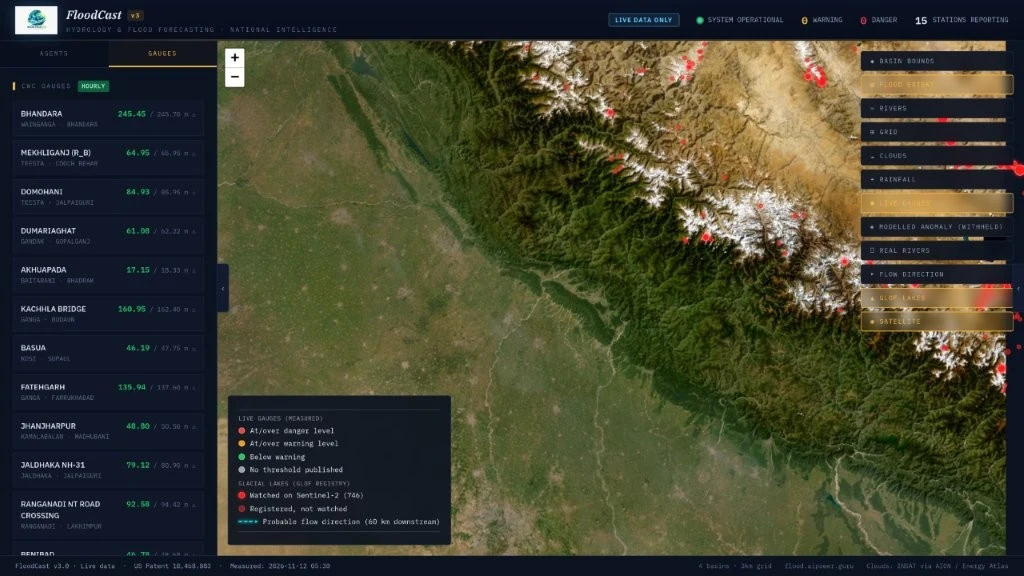
FloodCast works at a national scale. It polls 200 Central Water Commission river gauges every hour, and checks 746 Himalayan glacial lakes by satellite every day. Its alerts are built from measurements first. A modelled forecast only reaches the map once it has beaten a simple baseline, and the two are always labelled separately.
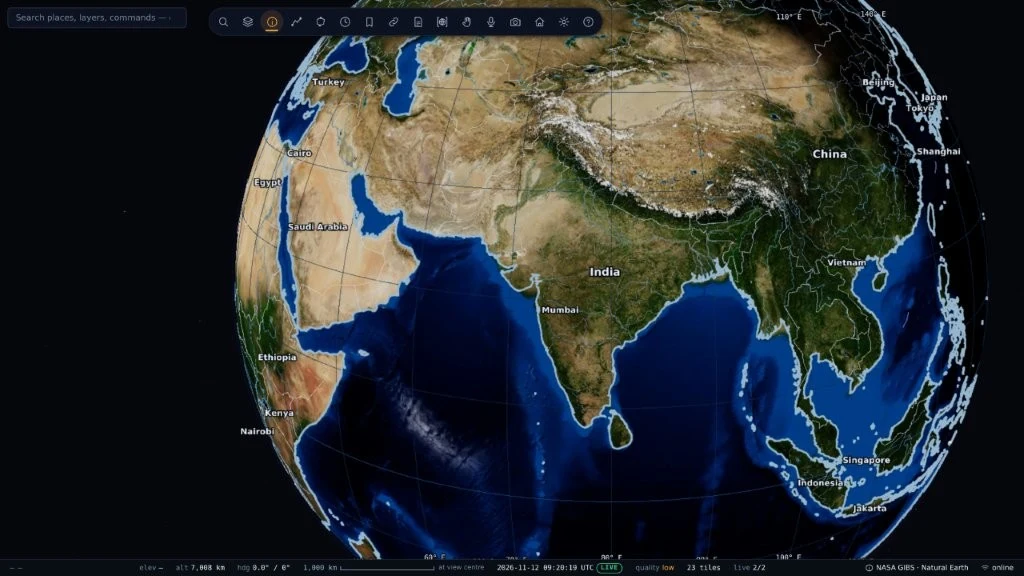
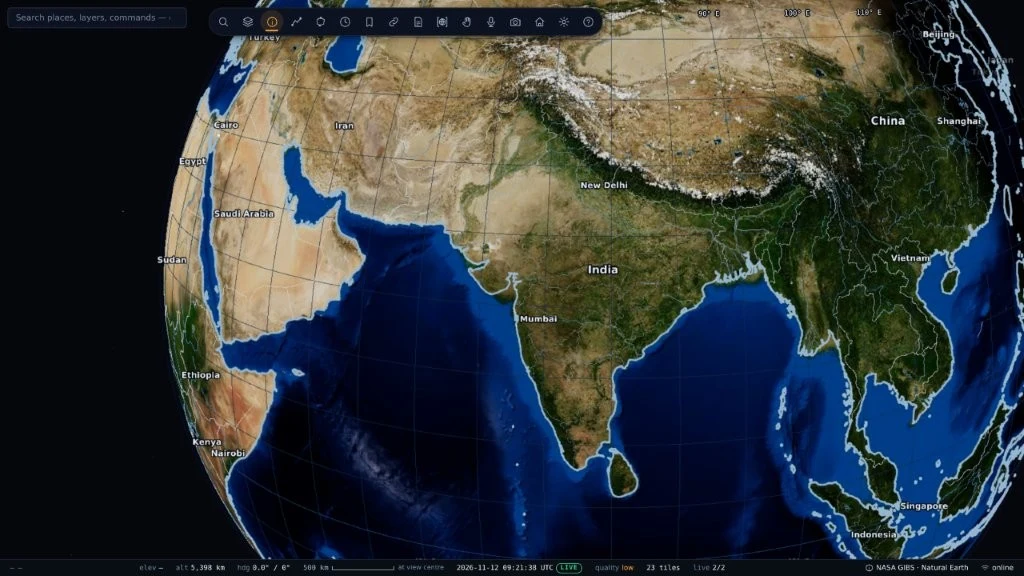
TerraLens, then, is a 3D map of the Earth that can be operated by hand gesture, voice or keyboard. An institution can also add any dataset it owns as a layer, with the source and licence shown alongside it. Both the gesture and speech recognition run inside the browser itself. So no audio or video has to leave the device.
Finally, AION Rakshak is the odd one out in the lineup, built for policing rather than power or water. It forecasts the registration workload of individual police stations seven days ahead, starting from a state’s own published FIR data. It also logs every override, surge alert and dispatch decision to a tamper evident ledger. AION is explicit that it forecasts station workload only. It does not score, rank or predict individual people.
Built-in AI co-pilots, and a free pilot
The power products also ship with AI co-pilots. However, these work from the same records the human operators see, rather than a separate chat layer bolted on top. So PowerGenie’s co-pilot answers questions with cited numbers attached. REDSM’s co-pilot can explain why a bill moved, or flag which substation breached a cap, citing the underlying rows it used. That puts AION in the same broader wave as India’s own push into homegrown AI models. It comes even as questions persist elsewhere about how much of the current AI investment boom will hold up.
Still, products can run on an institution’s own infrastructure or on AION’s, with private data kept behind the institution’s own proxy. Every plan is time stamped when it is issued, and is never overwritten afterward. The logs themselves are hash chained, so any later tampering would be visible. AION is offering a free 90-day pilot on its three power products, PowerGenie, REDSM and RE-cast, to interested utilities and discoms.
More on the company and its products is available at ai-on.agency.